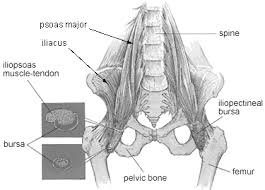
Today I’m off for my Steroid injection for the Psoas muscle. You might be wondering why, seen as I have a Hip replacement. Simple answer is its rubbing on the muscle, which is hindering me from simply lifting up the leg to do stairs.
After a total hip replacement. Patients can be susceptible to iliopsoas tendinopathy and/or bursitis after a total hip replacement. This often occurs due to friction of the bursa and tendon over the new metalwork. Patients experiencing these symptoms can respond very well to injection therapy. Injection therapy for this patient group is closely discussed with your surgeon prior to completing an injection.

Injection therapy is not a stand-alone treatment. It provides you with a pain-free ‘window of opportunity’ to rehabilitate your hip effectively. Complete recommend after undertaking an injection that a course of physiotherapy starts within two weeks to ensure best results are achieved.
Injection therapy is an excellent technique for reducing pain and inflammation and is particularly effective if you are suffering from one or more of the following:
Pain is waking you at night or stopping you from sleeping.
Pain is limiting you from completing activities of daily living or sporting/leisure activities.
Pain is restricting you from completing a physiotherapy rehabilitation program.
Due to the depth of the iliopsoas tendon and bursa, as well as the close proximity of the arteries, veins and nerves that supply the leg it is essential that an injection is ultrasound-guided. Ultrasound-guided injections have been shown to be highly accurate at delivering the medication to the target tissue. During this technique, real-time ultrasound imaging is used to guide the needle tip directly to the source of the symptoms. Due to this highly accurate technique, post-injection complications can be minimised. Research has shown ultrasound-guided injections to be more efficacious and has fewer complications than Landmark guided injections.
Ultrasound-guided corticosteroid injection is an effective treatment option for persistent pain associated with iliopsoas tendinopathy/bursitis (Garala et al., 2014 and Nunlet et al., 2009). During this guided technique a small amount of corticosteroid (powerful anti-inflammatory medication routinely used within injection therapy) is combined with a short-acting local anaesthetic. The consensus within the research states on average 10 to 12 weeks for a significant reduction in pain after receiving an ultrasound-guided corticosteroid injection. This window of opportunity will enable you to maximise your rehabilitation.
 Hipster
Leave a comment