Starting today on the 20th December. It’s the 12 Days of Yule, Each has a name and theme, and here we share what we can do to honour each day. And it starts with Mothers Night
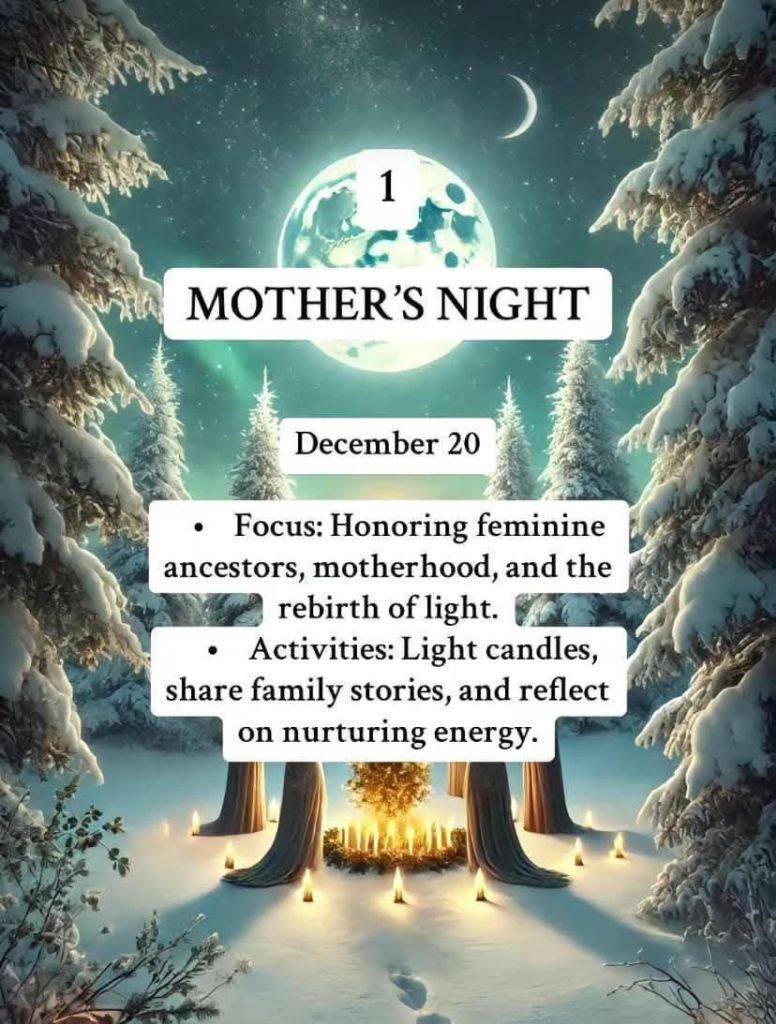
When: The night before the Winter Solstice, likely December 20th, 2025, as the Solstice usually falls on the 21st.
What: A night to honor the feminine – goddesses, ancestors, and female spirits (Dísir).
Traditions: Lighting candles, making food offerings, meditation, and recognizing protective female figures.
Context: It’s the start of the larger Yule festival, a Germanic/Norse midwinter celebration of rebirth and the return of light.
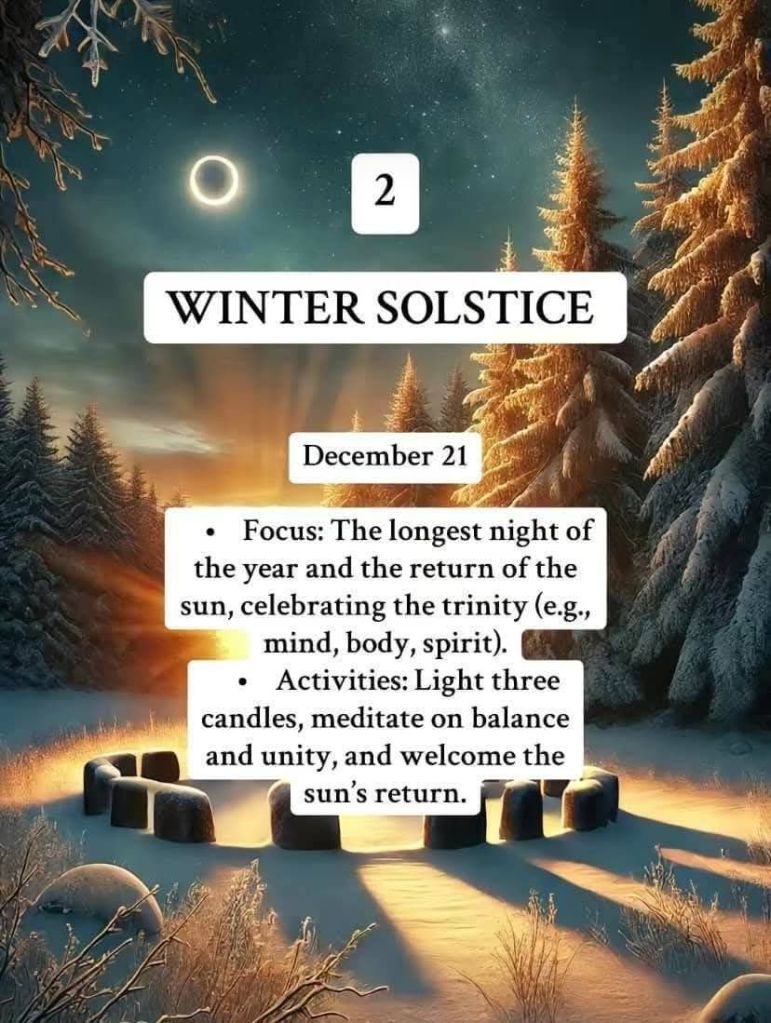
Timing: Coincides with the Winter Solstice (Dec 20-23 in Northern Hemisphere), celebrating the Sun’s symbolic “rebirth”.
Meaning: Marks the shortest day, a turning point, and the start of longer days.
Themes: Hope, rebirth, light, new life, introspection, gratitude, and connection to nature.
Origins: Rooted in ancient Germanic and Norse traditions, possibly linked to the Norse Jól.
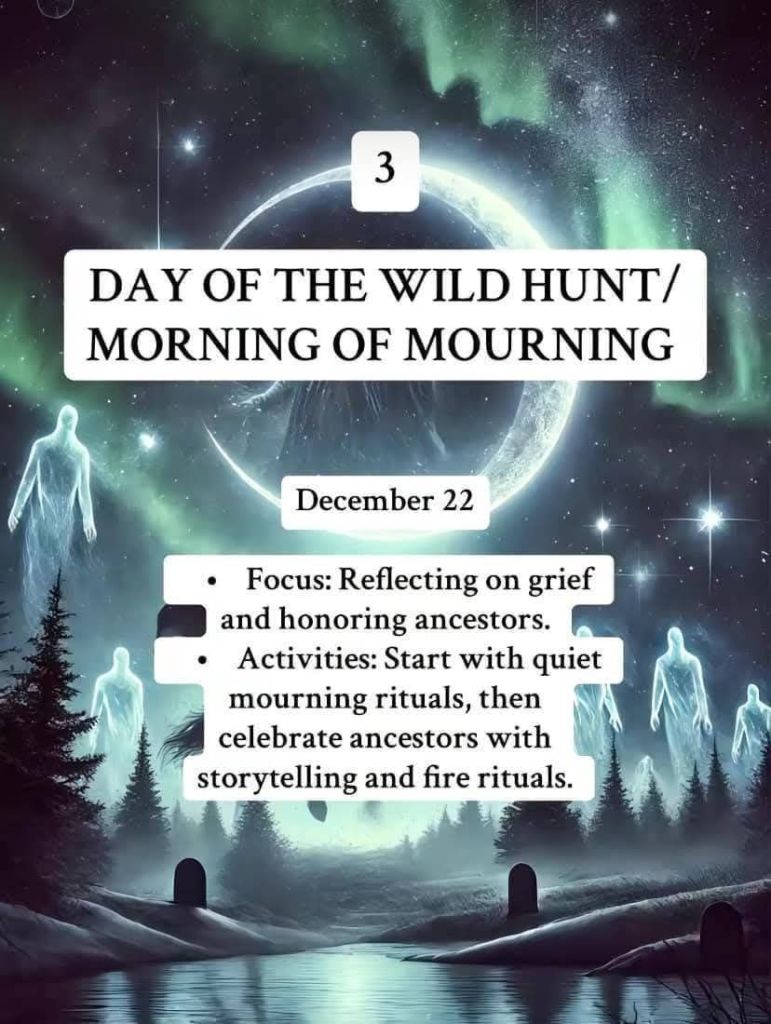
The Leader: Often Odin (Woden) in his guise as the “Allfather,” a wanderer, but sometimes other figures like Cain, Satan, or historical warriors.
The Riders: A ghostly host of the dead, valkyries, elves, or spectral hounds.
Timing: Associated with the darkest nights of Yule, often linked to the Winter Solstice, around December 21st, marking the shortest day.
Folklore & Ritual:
Danger: Witnessing the Hunt could bring war, plague, or death; people stayed inside, secured their homes, and used protection magic.
Offerings: Food, straw, or oats were left out for Odin and his steed, Sleipnir, often in a small boat, as offerings.
Symbolism: It represented the transition of seasons, the power of the gods, and the journey of the dead, with Yule rituals helping spirits pass and welcoming the returning light.
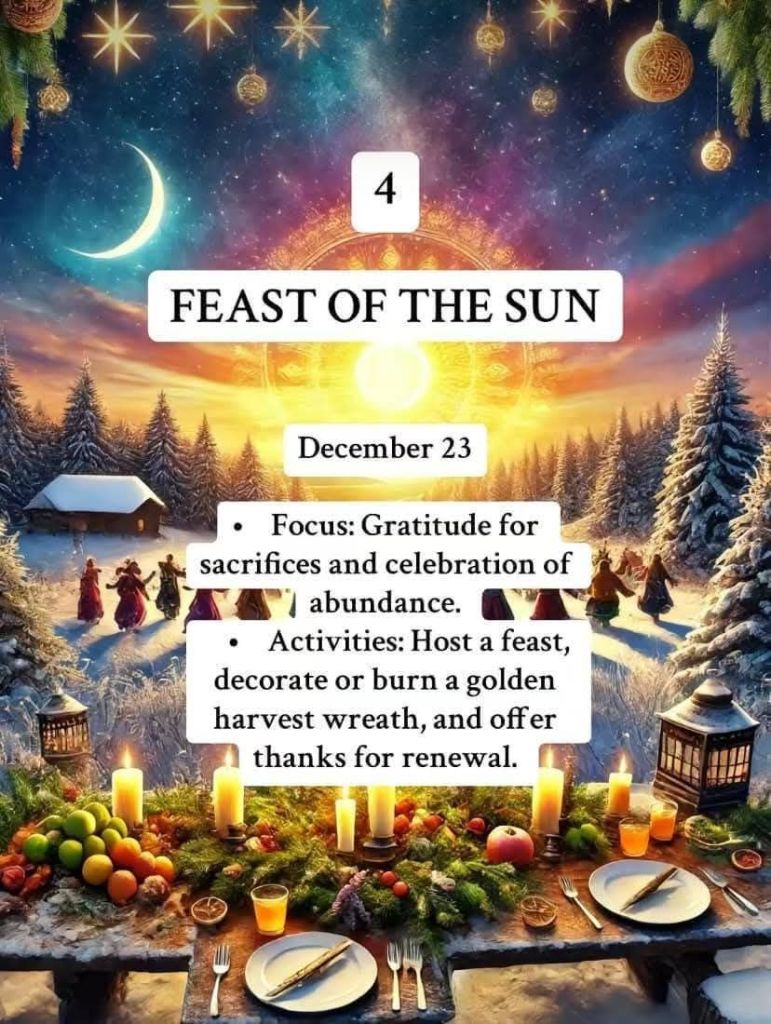
Rebirth of the Sun: The central idea is celebrating the sun’s return and the promise of spring after the darkest point of winter.
Light & Fire: Symbolized by candles, bonfires, and the traditional Yule log, representing the returning light.
Renewal & Reflection: A time to look back on the past year and plan for new beginnings, focusing on spiritual growth and nature’s cycles.
Key Traditions & Symbols
Yule Log: Burning a large log to welcome the returning sun, often lasting for days.
Evergreens: Decorating with holly, mistletoe, and fir trees to symbolize life persisting through winter.
Feasting & Merriment: Celebrations included feasting, singing, dancing, and gift-giving.
Dates: Observed around December 21st (Winter Solstice in the Northern Hemisphere).
Duration: Traditionally celebrated for 12 days, from the solstice eve to the New Year, linking to the “Twelve Days of Christmas”.
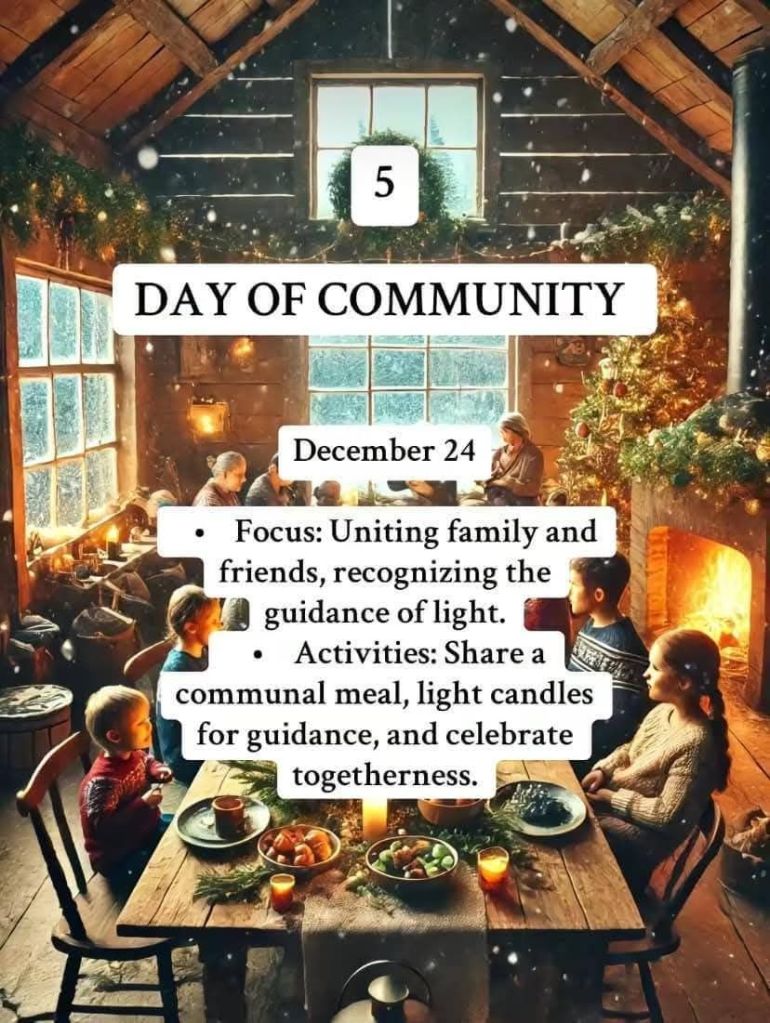
Timing: Often noted as the fifth night, or generally within the 12 days of Yule (mid-December to early January).
Activities: Sharing meals, telling stories, making crafts (like wreaths), exchanging gifts, and inviting loved ones over.
Themes: Hospitality, friendship, feasting, gratitude, and honoring ancestral bonds,.
Traditions: Burning yule logs, feasting on traditional foods, and connecting with nature’s cycles.
Modern Interpretations:
Many modern pagans and Heathens follow a 12-day structure, dedicating specific nights to different deities or virtues, with Community/Hospitality often highlighted.
It’s a time to build and reaffirm the “tribe” (community) through shared experiences and mutual support.
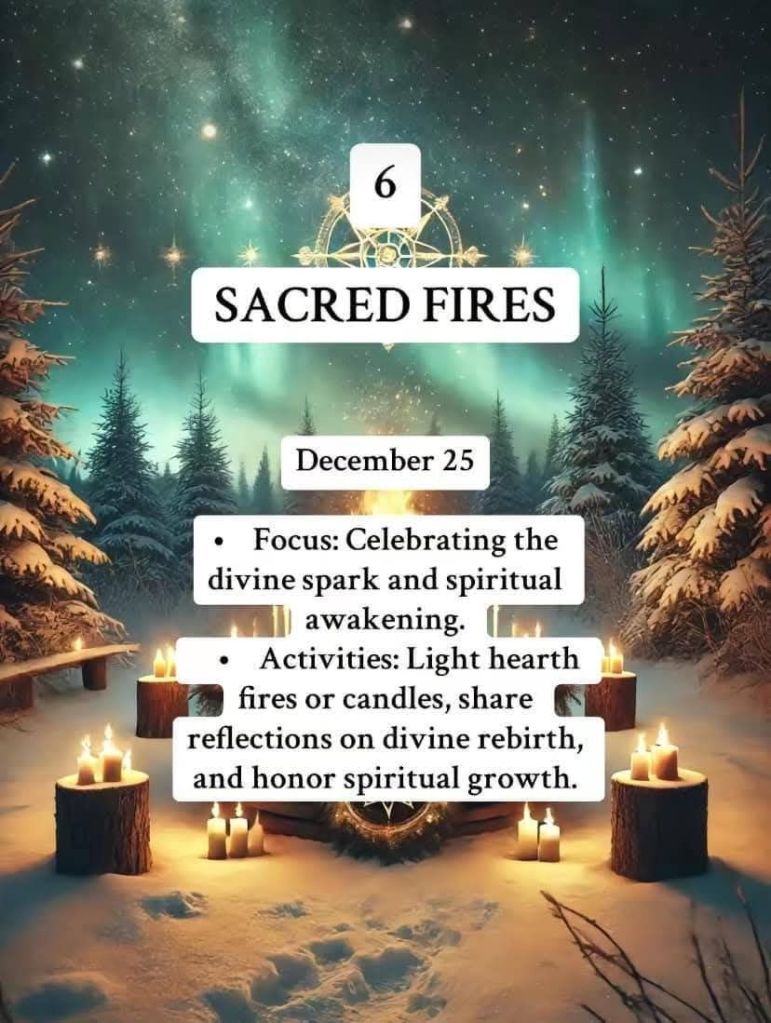
The Yule Log: A specially chosen log (often oak) was lit at the start of Yule, meant to burn for the entire 12-day festival, representing the old year burning away and new beginnings, with its ashes used for luck.
Bonfires: Large bonfires were lit on hilltops to mirror and help strengthen the sun’s power, with people dancing and singing around them.
Spreading the Light: Torches lit from the main Yule fire or bonfire would be carried to homes and fields, spreading blessings and warding off darkness.
Symbolism: The fires symbolized the Sun God’s return, the “birth” of new light, purification, fertility, and hope, dispelling winter gloom.
Rituals: Offerings (like blessed bread or mead poured into the fire) were made, and jumping over smaller fires was done for luck and healing.
Community: The fire was central to community gatherings, storytelling, feasting, and sharing during the long, dark nights.
This takes us to Christmas Day, tomorrow I will share the other 6 days.
 Hipster
Leave a comment