Following on from last week’s appointment and confirmation it’s the Psoas. It was time to deep dive into it, to share what I know about it, as it’s a common issue for us hippies.
What is the Psoas? The psoas muscle is found in the lower back area, and extends through the pelvis to the femur and is part of the iliopsoas muscle group. This muscle works by flexing the hip joint and lifting the upper leg towards the body, think stepping up the stairs. A common example of the movement created from this muscle is walking. So, you can probably understand how keeping it in optimal shape would be especially important. And why it frustrates me no end, it’s hindering my most basic act.
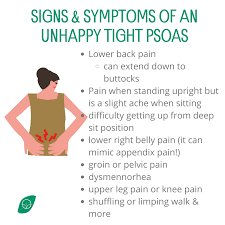
Symptoms of a tight psoas can be:
- Tension and pain in the lower back, hips, buttocks, pelvis, or groin
- Lower back spasms
- Radiating pain down the leg
- Sciatica
- Lumbar disc problems
- Limping
- Functional leg length discrepancy
- Idiopathic scoliosis
- Instability in the core of the body
- Limited flexibility in the lower back
Who experiences tightness of their psoas? They say it’s Office workers and athletes that tend to be the most affected. This is because the tightness is caused by overuse, regular limited movement, trauma (whether physical or emotional), and sitting for long periods of time. But often in hip dysplasia, and post op hippies too. Due to its location deep within the core of the body, the psoas muscle instinctively tightens up when we feel stress or fear. For some people, learning to let go of the tension in their psoas can be an intense emotional process. But understand that anyone can experience tightness of the psoas muscle and the pain associated with it.
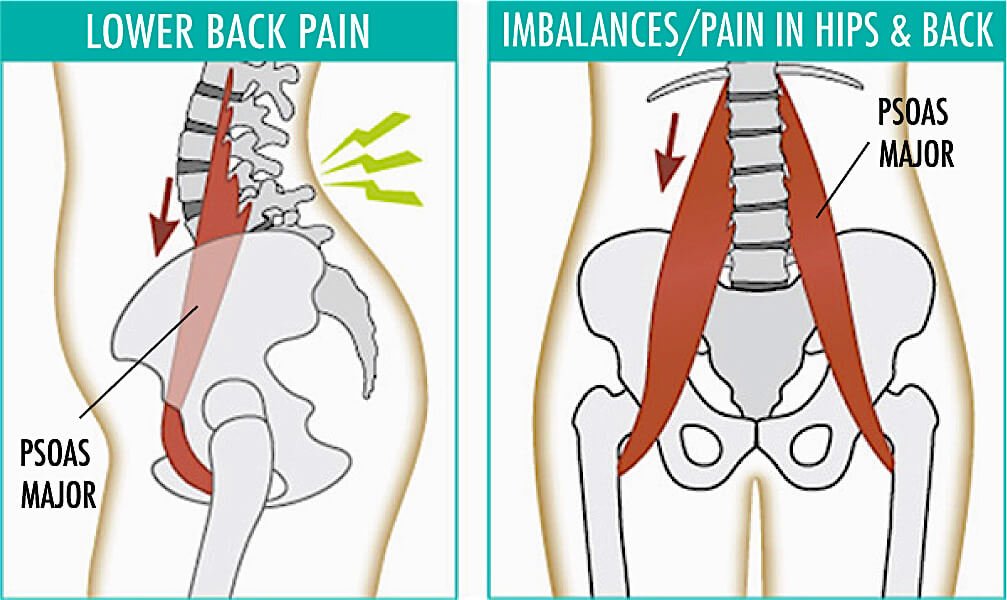
Lower back pain generally involves the psoas muscle in some form or fashion. The main tjob of our psoas muscle is to stabilize the lower back when you lift the knee upward. Additionally, the psoas is crucial for balance and you commonly exercise it whenever you walk or bend forward. Whenever the psoas muscle contracts, it pulls the spine into a condition known as hyperlordosis (when the inward curve of the spine in your lower back is exaggerated). Basically, the muscle pulls and shortens the spine into an over-arched position. Understandably, this puts a lot of stress on your spinal muscles. Muscles are not the only affected tissues, however. Psoas contraction strains vertebral joints as well. This is ultimately what causes the painful symptoms associated with the condition because the vertebral compression affects spinal nerve roots. This results in nerve pain and it is this kind of nerve pain that allows the discomfort to spread.



 Hipster
Leave a reply to BionicOldGuy Cancel reply